
Collagen Wound Care
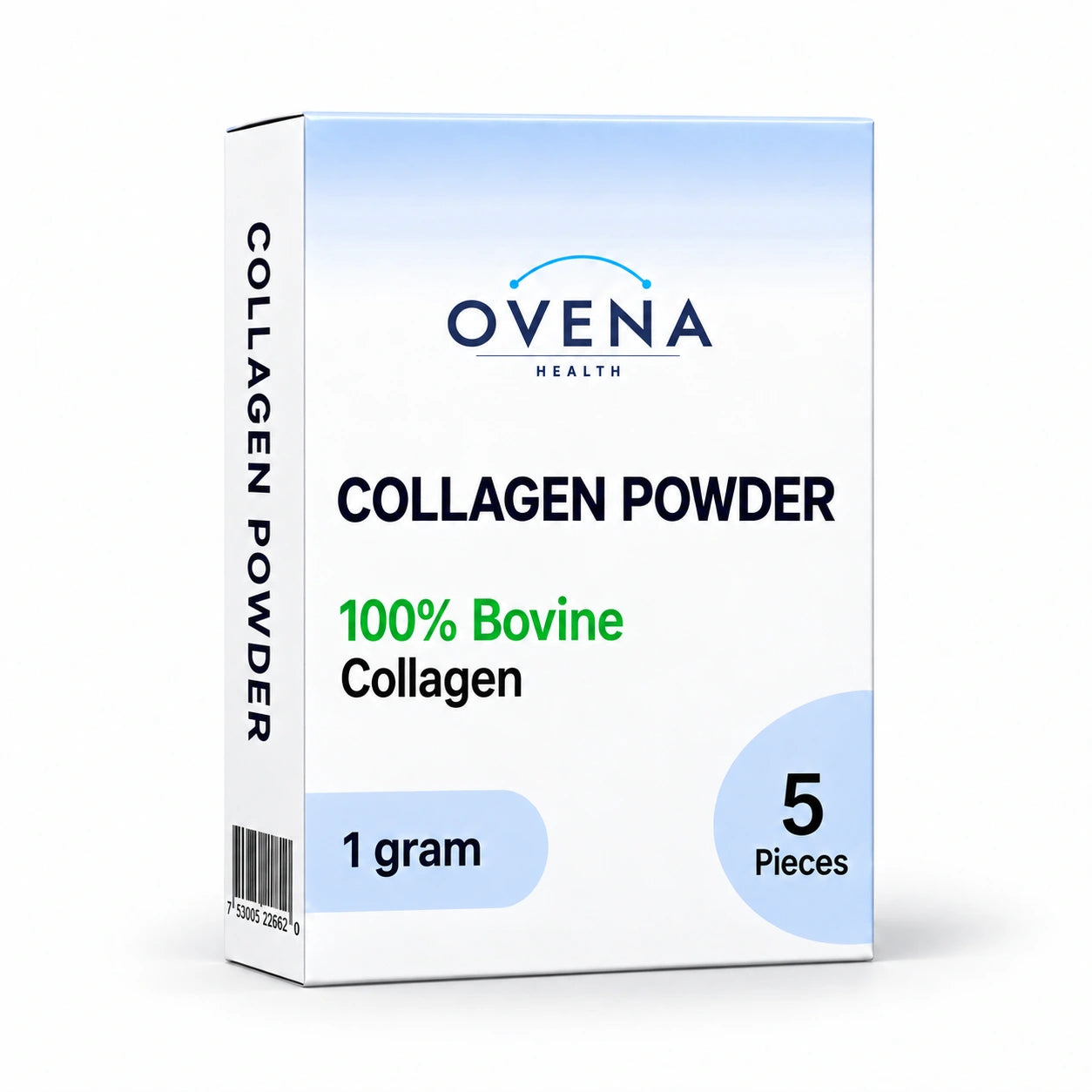
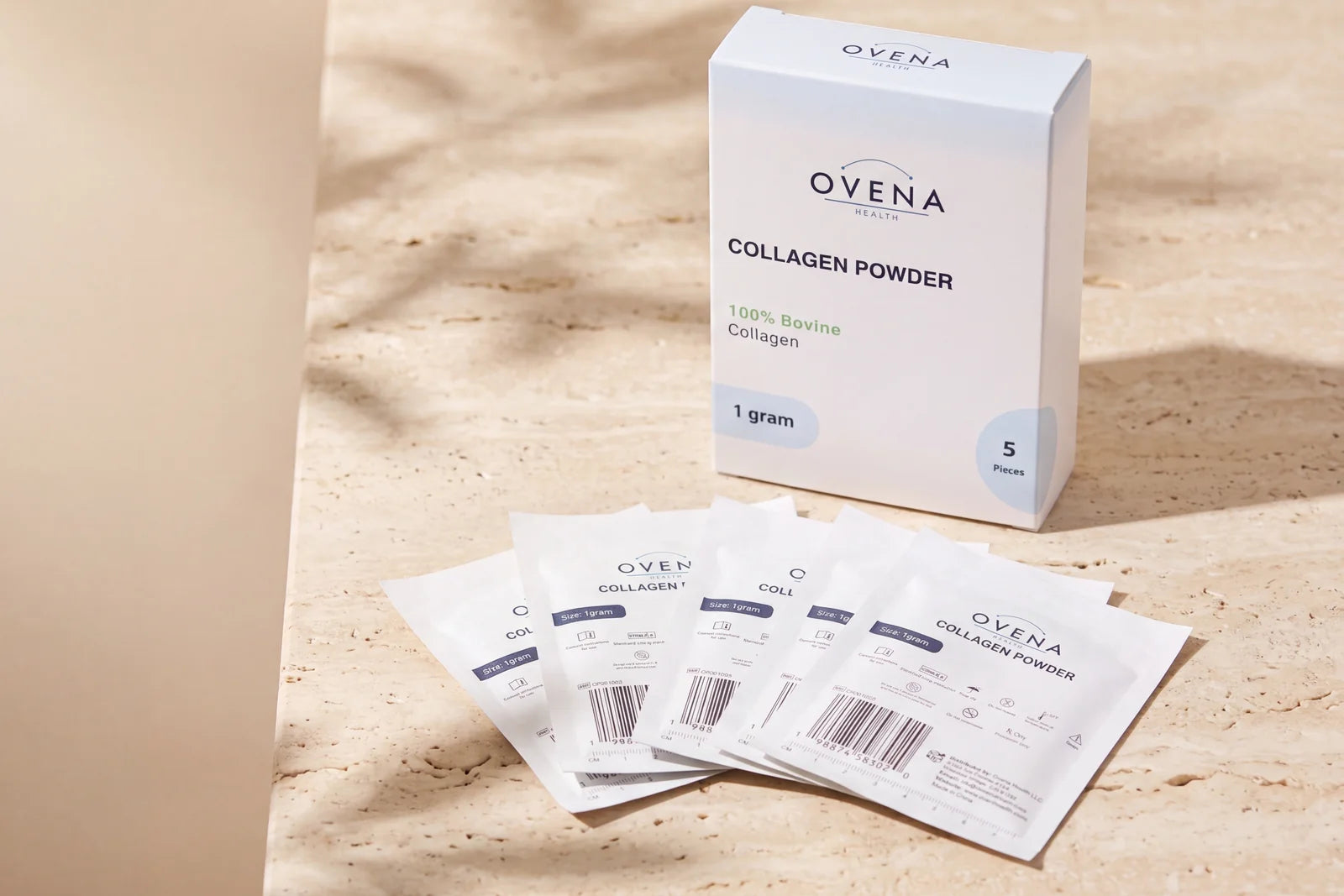
Collagen Wound Powder, 5 x 1 g Packets


Collagen Wound Care
Collagen Wound Powder, 5 x 1 g Packets
- Powder format for contoured wound beds
- 100% Type I bovine collagen, FDA 510(k) cleared
- Pre-measured sterile 1-gram single-use packets
- Apply to cover the wound bed as directed
- Absorbed in place, nothing to remove at the next change
Sterile bovine collagen powder in five single-use 1 g packets, for physician-directed wound care. A powder format can be practical where wound contours make a sheet difficult to position. Do not use if you are allergic to bovine (beef-derived) products.
Apply sufficient powder to cover the wound bed according to the supplied instructions for use, then protect it with a suitable secondary dressing. Your clinician determines the appropriate format, application method and reapplication schedule.
Benefits of Collagen Powder + clinical evidence
Clinical Studies
Diabetic ulcer RCT (2020) → Systematic review (2020) → · PubMedDressing or powder
Choose the format with your clinician.
Dressings and powder offer different ways to place collagen on a wound bed.
Dressing format
A pad format in 2 in × 2 in or 4 in × 4 in sizes, applied as directed.
Powder format
Single-use 1 g packets. Apply sufficient powder to cover the wound bed as directed.
Clinician-directed fit
Your clinician selects the format, application method and suitable secondary dressing.
Follow the supplied product instructions and your physician's wound-care plan.
Collagen wound care
Powder, for where sheets do not fit.
100% Type I bovine collagen in single-use powder packets. Provides a collagen scaffold that supports the wound healing process, for wounds and contours where powder fits better than a sheet.
Materials and construction
What it is made of.
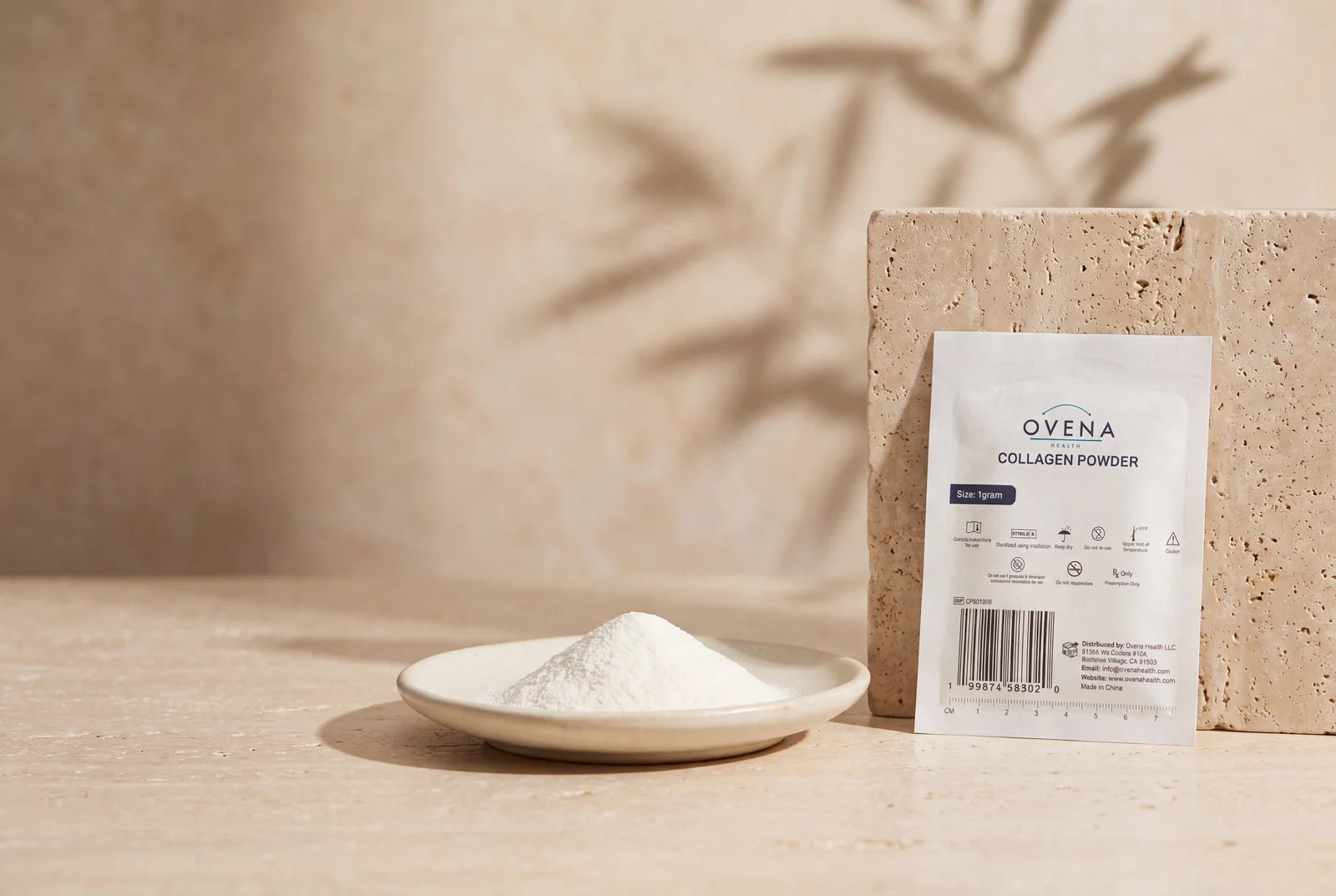
Single-use packets
Sterile bovine collagen in a convenient powder format.
100% Type I bovine collagen
Bovine collagen in a powder format for topical wound care.
Medical product, not a supplement
For topical use in wound care routines as directed by your clinician.
Inside the box
Five single-use sachets, one gram each.
Each box holds five individually sealed 1-gram sachets of 100% Type I bovine collagen. Apply sufficient powder to cover the wound bed as directed in the supplied instructions and your physician's plan. Follow the single-use directions on the packaging.
How to use
The routine, step by step.
Cleanse
Clean the area as directed and pat dry.
Apply
Dispense powder over the wound bed as directed.
Cover
Secure with a secondary cover dressing.
Follow directions
Repeat per your clinician's schedule.
Always follow your clinician's directions for your care plan.
Product details
- Format
- Powder particles, single-use packets
- Material
- 100% Type I bovine collagen
- Use
- Clinician-directed wound care routines
- Manufacturing
- ISO 13485-certified facility
Good to know
- Not for use on infected wounds until the infection is addressed by your clinician.
- Do not use if you are allergic to bovine (beef-derived) products.
Referenced research
The evidence behind the category.
Independent published research on this product category. Studies describe the category and mechanism, individual results vary.
Comparative analysis · 2020 · Adv Wound Care
A bovine collagen matrix vs saline-gauze care in stalled diabetic foot ulcers
In diabetic foot ulcers that had stalled under standard care, 50% shrank by at least 75% over four weeks with a bovine collagen matrix, versus 13% with daily saline gauze.
Systematic review · 2020 · J Wound Care
MMP-inhibiting dressings for chronic, hard-to-heal wounds
A systematic review of 16 randomized trials of MMP-inhibiting dressings — 13 of them collagen — found evidence of improved wound closure and healing time for some dressings, with trial quality varying.
Common questions
When is powder preferred over a sheet?
Powder is sometimes preferred for irregular contours where a flat sheet does not sit well. Your clinician will direct which format fits your routine.
Is this FSA/HSA eligible?
It may be FSA/HSA eligible. Eligibility varies by plan, so check with your administrator and keep your receipts.
Further reading
Clinically reviewed by David Chahine, MD. The deeper-dive guides our customers ask for most often.
How to apply a collagen wound dressing
A guide to collagen dressing care. Follow the supplied product instructions and your physician's plan.
Read guide →Explainer · 8 minWhat are matrix metalloproteinases?
The enzymes that stall healing, and how collagen binds them.
Read guide →Pillar · 7 minPressure ulcer dressing by stage (1-4)
Questions to discuss with your clinician when choosing a wound dressing.
Read guide →Compare · 8 minCollagen vs hydrocolloid, which to use when
Two completely different mechanisms. The decision tree.
Read guide →Questions about products or care routines?
Our clinical team can help with product selection, sizing, and use directions.
Clinical support →-
Secure checkout
SSL encrypted. Card details never touch our servers.
-
30-day returns
Unopened items, original packaging. Refund policy
-
Free US shipping over $75
Ships in 1-2 business days from California. Shipping policy
-
Talk to a person
+1 (888) 338-0490, Mon-Fri 8-6 Pacific.
Collagen powder guides
Explore collagen formats, application, and dressing-change guidance.
Customer reviews
Be the first to review this product.
We publish every review we receive from a confirmed purchase, positive or not. Nothing here yet for this item.
Write a review
Bought this from us? Tell other people how it went. We check each review against an order before it goes up, which is why reviews take a few days to appear.